Here’s an elaboration of each item in the Mount Kenya Gear Checklist, explaining the importance of each:
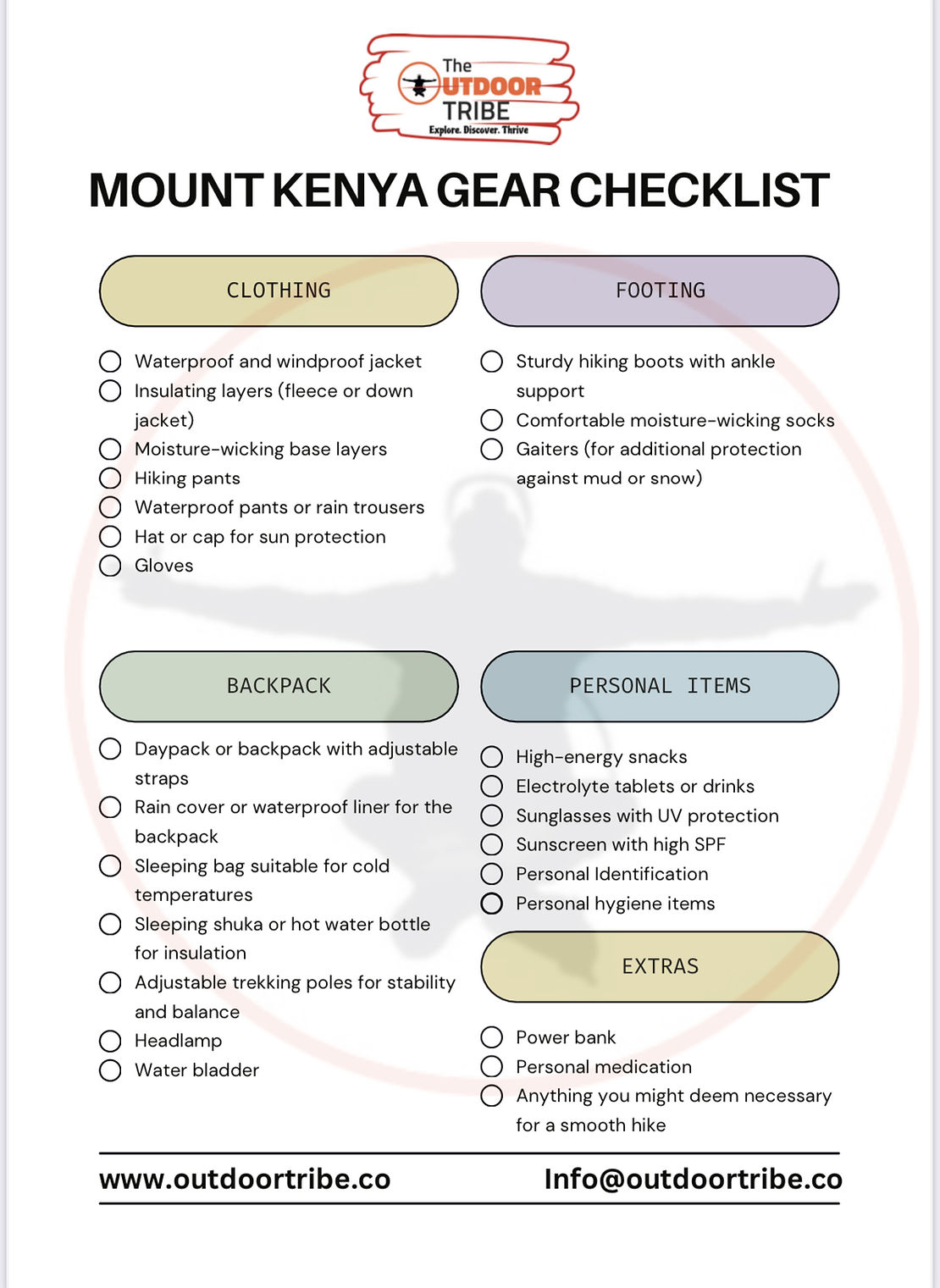
Clothing
Waterproof and windproof jacket: Essential for protecting against unpredictable mountain weather, including rain and wind, helping you stay dry and warm.
Insulating layers (fleece or down jacket): These provide warmth in the cold temperatures typically experienced at higher altitudes. Layers allow you to adjust based on changing weather conditions.
Moisture-wicking base layers: These keep sweat away from your body, ensuring you stay dry, preventing discomfort and the risk of hypothermia in colder conditions.
Hiking pants: Durable and comfortable, they offer protection against rough terrain while allowing freedom of movement.
Waterproof pants or rain trousers: Critical for keeping your lower body dry during rain or when crossing wet areas, preventing cold and discomfort.
Hat or cap for sun protection: Protects your face and head from harmful UV rays, especially at higher altitudes where the sun is more intense.
Gloves: Keep your hands warm in cold conditions and protect them from rough surfaces or sharp rocks.
Footing
Sturdy hiking boots with ankle support: Essential for providing stability on uneven terrain, protecting your feet and ankles from injury.
Comfortable moisture-wicking socks: These help prevent blisters by keeping your feet dry, which is crucial for long-distance hikes.
Gaiters: Protect your feet and lower legs from mud, snow, or debris, adding an extra layer of protection and comfort.
Backpack
Daypack or backpack with adjustable straps: Ensures you can carry your essentials comfortably throughout the hike, with adjustable straps providing a better fit and load distribution.
Rain cover or waterproof liner for the backpack: Keeps your belongings dry during rain, protecting crucial items like clothes, food, and electronics.
Sleeping bag suitable for cold temperatures: Necessary for staying warm at night, especially at higher altitudes where temperatures can drop significantly.
Sleeping shuka or hot water bottle for insulation: Adds an extra layer of warmth during the night, ensuring a more comfortable sleep.
Adjustable trekking poles for stability and balance: Helps reduce strain on your knees and improve balance on steep or uneven trails.
Headlamp: Essential for navigating in low light or at night, particularly if the hike involves early mornings or late evenings.
Water bladder: Convenient way to stay hydrated without having to stop frequently, ensuring you maintain energy and focus throughout the hike.
Personal Items
High-energy snacks: Provide quick energy boosts to keep you fueled and maintain stamina during long hikes.
Electrolyte tablets or drinks: Replenish vital electrolytes lost through sweat, preventing dehydration and muscle cramps.
Sunglasses with UV protection: Protect your eyes from intense sunlight, which can be more harmful at higher altitudes.
Sunscreen with high SPF: Prevents sunburn and skin damage, particularly when hiking in exposed areas with little shade.
Personal identification: Crucial for safety reasons and emergencies, ensuring you can be identified and assisted if needed.
Personal hygiene items: Includes essentials like wet wipes or tissues, ensuring cleanliness and comfort during the hike.
Extras
Power bank: Keeps your electronic devices charged, particularly your phone or camera, which may be crucial for navigation or communication.
Personal medication: If you have any medical conditions or require medications, it’s vital to have these with you for your well-being during the hike.
Anything you deem necessary for a smooth hike: Any personal comfort or safety items that will enhance your hiking experience, such as lip balm, insect repellent, or a multi-tool.
This gear ensures you’re well-prepared for Mount Kenya’s challenging conditions, making the hike safer, more comfortable, and enjoyable.